

Pharmaceutical innovation often begins with years of research, testing and investment. A new chemical entity, improved formulation, manufacturing process or drug-delivery system may become a valuable business asset. However, commercial value can be weakened if the invention is disclosed too early, filed under the wrong claim strategy or assessed without adequate prior-art research.
A pharmaceutical patent strategy in India should therefore connect scientific development with intellectual property planning. It should address patentability, ownership, confidentiality, prosecution, enforcement, licensing and international protection from the earliest practical stage.
Why Pharmaceutical Patent Protection Matters
A patent gives the owner a statutory right to prevent unauthorised commercial use of the claimed invention, subject to the scope and validity of the granted claims. For pharmaceutical and biotech businesses, this protection can support:
- Investment in research and development.
- Commercial negotiations and licensing.
- Technology transfer and collaboration.
- Protection against unauthorised manufacturing or use.
- Stronger valuation during fundraising, acquisition or strategic partnerships.
- Differentiation of innovative products in competitive markets.
Patent protection is not limited to a finished drug. Depending on the invention, protection may be considered for a molecule, biological material, formulation, manufacturing process, intermediate, delivery system or technical production method.
Patent filing services should be planned alongside research, regulatory and commercial activities. Patent protection and regulatory approval are separate processes. A patent does not guarantee approval for manufacture or sale, and regulatory approval does not create patent rights.
What Pharmaceutical Inventions May Be Protected?
Product patents
A product patent protects the claimed product itself. In pharmaceutical practice, this may include:
- A new chemical entity (NCE).
- A novel active pharmaceutical ingredient (API).
- A new biologic or engineered biological product, where patentable subject matter and disclosure requirements are satisfied.
- A specific composition with defined ingredients and characteristics.
- A novel pharmaceutical formulation or drug-delivery system.
A product claim can be commercially important because protection may extend to unauthorised manufacture, use, sale or importation of the claimed product during the patent term. The precise scope depends on the language of the claims and the final grant.
Process patents
A process patent protects a novel method of producing a product. Examples may include:
- A new synthetic route for an API.
- A manufacturing process that uses a new reactant.
- A method that produces a distinct and properly characterised form.
- A scalable purification or crystallisation process.
- A technical process that improves consistency, safety or manufacturing efficiency in a non-obvious way.
A routine change in temperature, duration, solvent or equipment may not be sufficient by itself. The process must be assessed for novelty, inventive step and statutory exclusions, including the requirements relevant to Section 3(d) of the Patents Act, 1970.
Formulation and drug-delivery inventions
Formulations may involve controlled release, stability, particle engineering, targeted delivery, excipient systems or fixed-dose combinations. However, formulation patents receive close scrutiny in India.
A formulation should not be presented as merely a known drug in a different physical form. The application should clearly explain the technical problem, the formulation features that solve it and the supporting data. Where the claimed subject matter concerns a new form of a known substance, Section 3(d) considerations become particularly important.

Patentability Requirements in India
Patentability means more than being commercially useful. A pharmaceutical invention generally needs to satisfy the core requirements under Indian patent law.
Novelty
Novelty means that the invention should not already be disclosed in a single prior-art reference. Public disclosures may include:
- Published patent applications.
- Scientific papers and conference presentations.
- Product brochures and technical websites.
- Regulatory or research disclosures.
- Public demonstrations.
- Earlier commercial use or sale.
A disclosure before filing can create serious risk. Confidentiality should be maintained until an appropriate patent application has been filed.
Inventive step
Inventive step asks whether the invention involves a technical advancement or economic significance and is not obvious to a person skilled in the relevant field.
For pharma inventions, the analysis may consider whether the claimed molecule, formulation, process or combination would have been an obvious choice based on existing knowledge. Unexpected results, improved technical performance and a clearly defined problem-solution approach may help support the inventive-step position.
Industrial applicability
Industrial applicability means that the invention can be made or used in an industry. Pharmaceutical inventions should be described with sufficient technical detail to show practical use and reproducibility.
The application should not rely only on broad statements of potential benefit. Experimental examples, analytical data, process parameters and appropriate technical support can make the disclosure more credible and useful during examination.
Section 3(d): A Critical Consideration for Pharma Patents
Section 3(d) of the Patents Act, 1970 excludes certain subject matter from the definition of an invention. It is particularly important when an application concerns a new form, new property, new use or derivative of a known substance.
The statutory explanation refers to forms such as:
- Salts.
- Esters and ethers.
- Polymorphs.
- Metabolites.
- Pure forms.
- Particle sizes.
- Isomers.
- Mixtures of isomers.
- Complexes.
- Combinations and other derivatives.
These may be treated as the same substance unless they differ significantly in properties with regard to efficacy. The relevant statutory text is available through the official IP India resource on Section 3(d).
In practical terms, improved solubility, stability, flow properties or bioavailability may not automatically establish the required enhancement of efficacy. The applicant should carefully connect the claimed technical change with the relevant therapeutic or functional advantage and provide appropriate comparative support.
Section 3(d) does not mean that every secondary pharmaceutical patent is prohibited. It means that the application must be built around a genuine technical contribution and supported by a carefully prepared specification and evidence strategy. The Supreme Court’s decision in Novartis AG v. Union of India remains an important reference point in understanding the application of Section 3(d).
Other provisions may also require attention. For example, Section 3(e) may affect claims directed to a mere admixture, while Section 3(i) concerns certain methods of medical treatment. Claim drafting must account for the complete statutory framework rather than focusing on one provision alone.
Prior-Art and Patentability Searches
A patentability search should ideally be performed before significant public disclosure and before finalising the filing strategy.
A practical search may review:
- Patent databases in India and other relevant jurisdictions.
- Patent families and cited references.
- Scientific and technical literature.
- Existing formulations and manufacturing disclosures.
- Competing products and publicly available technical information.
- Earlier applications filed by collaborators, employees or research institutions.
The search should not be treated as a guarantee of grant or validity. It is a risk-assessment exercise. It helps identify relevant disclosures, refine claim scope, locate potential Section 3(d) issues and determine whether additional data or technical work may be useful.
A separate freedom-to-operate review may also be required. Patentability asks whether an invention may qualify for protection. Freedom to operate asks whether commercial activity may risk infringing third-party rights. These are different questions and should not be confused.
Provisional or Complete Specification?
Provisional specification
A provisional specification may be useful when research is at an advanced but continuing stage. It can help establish an early priority date while the invention is further developed.
However, it should contain an adequate description of the invention. A provisional filing should not be treated as a placeholder for undisclosed concepts. Subject matter added later may not receive the original priority date.
Complete specification
A complete specification should define the invention in detail and include claims, description, examples and supporting disclosure. It should be drafted to cover the commercially important aspects of the invention without exceeding what has actually been developed and supported.
For pharma applicants, this may involve careful treatment of:
- Markush structures and chemical variants.
- Formulation ranges.
- Process parameters.
- Biological or analytical data.
- Comparative examples.
- Alternative embodiments.
- Product-by-process considerations.
- Enablement and sufficiency of disclosure.
Ownership, Assignments and Confidentiality
Before filing, the applicant should confirm who owns the invention. Ownership may involve a company, founder, employee, consultant, university, hospital, contract research organisation or joint-development partner.
Written agreements should address:
- Invention ownership.
- Assignment of patent rights.
- Confidentiality.
- Publication approval.
- Use of research results.
- Inventor cooperation during prosecution.
- Rights relating to improvements and follow-on inventions.
Employee and inventor assignments should be completed clearly and maintained with the project records. A disagreement over ownership can delay licensing, investment or enforcement even where the underlying invention is technically strong.
Confidentiality should apply to laboratory discussions, investor presentations, research papers, website content, conference abstracts and product demonstrations. A non-disclosure agreement can support confidentiality, but it does not replace the need for timely patent filing.
Patent Prosecution and Lifecycle Management
Patent prosecution includes examination, responding to objections, attending hearings where required and managing procedural deadlines. Pharma applications may receive objections relating to novelty, inventive step, clarity, support, sufficiency, unity and statutory exclusions.
A strong prosecution strategy should:
- Review the First Examination Report carefully.
- Address Section 3(d) and Section 3(e) issues with evidence and legal reasoning.
- Maintain consistency between the description and claims.
- Avoid unnecessary narrowing without assessing commercial impact.
- Consider divisional applications where legally and strategically appropriate.
- Monitor opposition risks.
- Record important deadlines and renewal requirements.
Lifecycle management should begin before grant. Businesses may review additional inventions arising from formulation optimisation, manufacturing scale-up, delivery technology or stability studies. Each follow-on invention should be assessed independently. A later filing should not be used to artificially extend protection for a known invention without a genuine patentable contribution.
Licensing, Enforcement and International Filing
A pharmaceutical patent may be licensed for manufacturing, distribution, research, technology transfer or regional commercialisation. Licence agreements should define territory, field of use, royalties, milestones, quality responsibilities, sublicensing, reporting, confidentiality and dispute resolution.
Enforcement planning should include monitoring of competing products, supply chains, patent registers and public disclosures. The available remedy depends on the facts, claim scope, evidence and procedural posture. No enforcement outcome should be guaranteed in advance.
For international markets, applicants may evaluate:
- Direct national filings.
- Convention filings.
- The Patent Cooperation Treaty (PCT) route.
- Key manufacturing jurisdictions.
- Target markets and licensing territories.
- Countries where research, production or supply-chain activity occurs.
A PCT filing can help preserve strategic flexibility, but it does not result in a single worldwide patent. Each national or regional office will apply its own laws during examination. India will continue to apply the Patents Act, including Section 3(d), to applications entering the Indian national phase.
Why Work with VS IPR & LEGAL ADVISORS LLP?
VS IPR & LEGAL ADVISORS LLP provides a one-roof approach for businesses that need coordinated intellectual property and corporate support. The firm can assist pharmaceutical companies, biotech startups, formulation manufacturers, R&D teams and research institutions with:
- Prior-art and patentability searches.
- Patent drafting and filing.
- Provisional and complete specifications.
- Patent prosecution and examination responses.
- Patent portfolio and lifecycle planning.
- International and PCT filing strategy.
- Trademark, design and copyright protection.
- Licensing and technology-transfer support.
- Corporate and commercial advisory.
The objective is clear communication, practical risk assessment and accountable support at each stage. A consultation can help identify the right filing route, ownership structure, confidentiality measures and evidence requirements for a proposed pharmaceutical invention.
Expert Team

Mr. Sanjay Trivedi : Intellectual Property and Legal Advisor

Vipul Bhatt : Intellectual Property and Legal Advisor
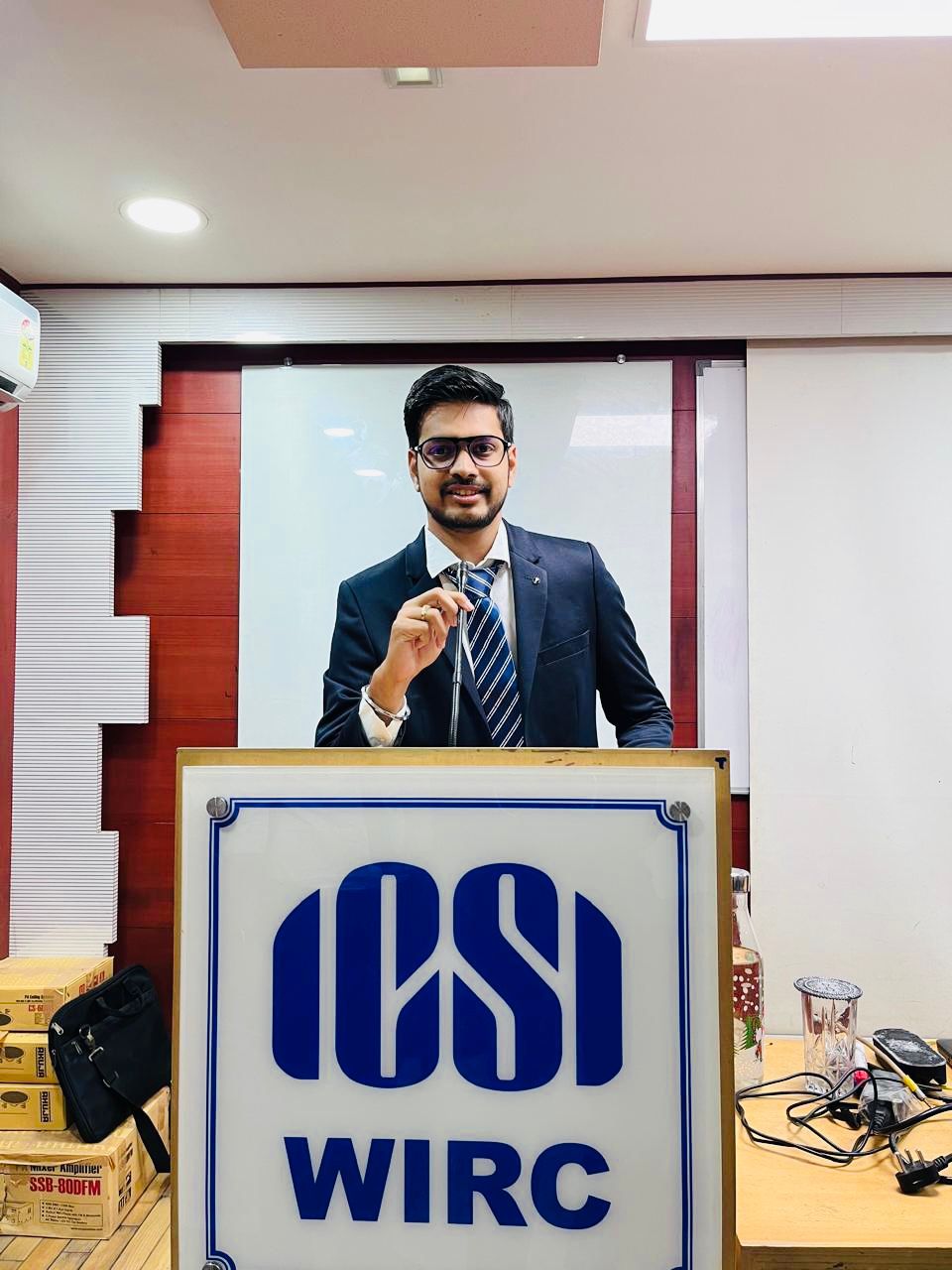
Harsh K Mehta : Intellectual Property and Legal Advisor
Protect the Innovation Before the Disclosure
A pharmaceutical patent strategy should be aligned with research milestones, ownership records, evidence generation, product planning and international business objectives. Early advice can help reduce avoidable filing risks and improve the quality of decisions before a product, process or formulation reaches the market.
For professional Patent Filing Services and support from an experienced Intellectual Property Lawyer, let’s talk. Call us today to discuss your molecule, formulation, process or biotech innovation. Share the basic project details and leave a message for a confidential consultation.
VS IPR & LEGAL ADVISORS LLP
B-005 & 6 SURYA KIRAN BUILDING, AWADHUT NAGAR, NEAR ANAND JUICE CENTER, DAHISAR-EAST, MUMBAI 400068, MAHARASHTRA.
EMAIL: PROCESS.VSLEGAL@GMAIL.COM | LEGAL@VSIPR.COM
TEL: +91 8898979393 | +91 9326362813 | +91 8652519622
This article is provided for general informational purposes and does not constitute legal, patent or regulatory advice. Patentability, prosecution strategy, regulatory requirements and commercial risk depend on the facts of each matter. Professional advice should be obtained before filing, disclosure, licensing or enforcement decisions.
 Contact Us