As per sec 22 of the CGST/SGST Act 2017, every supplier who makes a taxable supply i.e supply of goods and/ or services which are leviable to tax under GST law, and his aggregate turnover in a financial year exceeds the threshold limit of twenty lakh rupees shall be liable to register himself in the state or the union territory of Delhi or Puducherry from where he makes the taxable supply.
Sec 24 of the CGST act mention certain categories of suppliers, who shall be liable to take GST registration even if their aggregate turnover is below the said threshold limit of 40 lakh rupees.
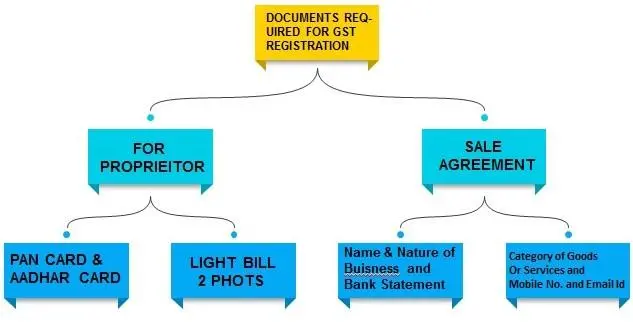
In the GST Regime, businesses whose turnover exceeds Rs. 40 lakhs* (Rs 10 lakhs for NE and hill states) is required to register as a normal taxable person. This process of registration is called GST registration.For certain businesses, registration under GST is mandatory. If the organization carries on business without registering under GST, it will be an offence under GST and heavy penalties will apply.
CBIC has notified the increase in threshold turnover from Rs 20 lakhs to Rs 40 lakhs. The notification has come into effect from 1st April 2019.
On July 1st, 2017, India moved to a new tax system – one that aims at converting the entire nation into a single market. If you are new to GST and keen to know how this new tax will affect you and your business, this section will help you understand the basics of the ‘Good and Simple Tax’.
Goods and Services Tax is levied on the supply of goods and services. Goods and Services Tax Law in India is a comprehensive, multi-stage, destination-based tax levied on every value addition. GST is a single domestic indirect tax law for the entire country.
Under the GST regime, the tax is levied at every point of sale. In the case of intra-state sales, Central GST and State GST are charged. All the inter-state sales are chargeable to the Integrated GST.



 Contact Us