

The entrepreneurial landscape in 2026 is defined by agility, digital presence, and personal branding. For the modern solo founder: whether you are a high-end consultant, a tech developer, or a creative designer: choosing the right legal structure is the most critical decision you will make. While the traditional route often led to a simple “Sole Proprietorship,” the rise of the One Person Company (OPC) has completely shifted the paradigm.
An OPC allows a single individual to enjoy the benefits of a corporate structure while maintaining total control. It bridges the gap between the simplicity of a proprietorship and the prestige of a Private Limited company. At VS IPR & LEGAL ADVISORS LLP, we have spent the last decade helping visionaries transition from “freelancer” to “Founder” through streamlined registration and strategic legal advisory.
What is a One Person Company (OPC)?
One Person Company (OPC) is a corporate entity defined under Section 2(62) of the Companies Act, 2013, which allows a single shareholder to form a company. Unlike a standard Private Limited company that requires at least two shareholders and two directors, an OPC is built specifically for the solo power-player. It is a Separate Legal Entity, meaning the company exists independently of its owner in the eyes of the law.
Why Choose OPC Over a Sole Proprietorship?
For years, solo founders defaulted to a Sole Proprietorship because it was easy to set up. However, in 2026, the risks of a proprietorship often outweigh the ease.
Limited Liability Protection
In a Sole Proprietorship, there is no distinction between your personal assets and your business liabilities. If your business faces a legal claim or debt, your personal home, car, and savings are at risk. An OPC provides Limited Liability, meaning your personal wealth is protected. Your liability is limited only to the extent of your investment in the company.
Credibility and Brand Image
Operating as “Your Name & Associates” doesn’t carry the same weight as “Your Brand Name (OPC) Private Limited.” Large corporations and government bodies often prefer dealing with registered companies rather than individuals. An OPC provides instant professional legitimacy, making it easier to secure contracts and high-value clients.
OPC vs. Private Limited: The Solo Advantage
While a Private Limited company is the gold standard for scaling with partners, it comes with heavy compliance burdens that can distract a solo founder.
- Single-Owner Control: In an OPC, you don’t need a co-founder to meet legal requirements. You are the 100% shareholder and can be the sole Director.
- Reduced Compliance: OPCs enjoy several exemptions. For instance, they are not required to hold an Annual General Meeting (AGM) and have a simplified process for filing annual returns.
- Perpetual Succession: An OPC is a “legal person” that lives on. By appointing a nominee, you ensure that the business continues to exist even in the event of the member’s death or incapacity.
Eligibility Criteria for OPC Registration in 2026
Before you start the paperwork, you must ensure you meet the updated eligibility requirements set by the Ministry of Corporate Affairs (MCA):
- The Founder: Only a natural person who is an Indian citizen is eligible to incorporate an OPC.
- Residency: Recent updates have made it easier for Non-Resident Indians (NRIs) to register an OPC, provided they meet specific stay requirements in India.
- The Nominee: You must appoint a nominee who will take over the company in your absence. This person must also be an Indian citizen.
- One Person, One OPC: An individual can only be a member of one OPC at any given time.
- Non-Profit Exclusion: An OPC cannot be incorporated for “Section 8” (charitable) purposes.
The Registration Process: Step-by-Step
Navigating the MCA V3 portal can be complex, but with the right legal partner, the process is smooth. Here is how we handle your registration at VS IPR & LEGAL ADVISORS LLP:
Step 1: Obtain a Digital Signature Certificate (DSC)
Since all filings are electronic, the first step is to obtain a Class 3 DSC. This serves as your digital identity for signing all government forms.
Step 2: Director Identification Number (DIN)
We apply for your DIN, a unique identification number required for any individual serving as a director in India.
Step 3: Name Reservation (SPICe+ Part A)
We help you choose a unique, legally compliant name for your business. The name must end with “(OPC) Private Limited.”
Step 4: Preparation of Charter Documents
We draft the Memorandum of Association (MOA) and Articles of Association (AOA). These documents define the company’s objectives and internal rules.
Step 5: Filing for Incorporation (SPICe+ Part B)
The final application includes the MOA, AOA, identity proofs, and office address proof. This integrated form also applies for your PAN (Permanent Account Number) and TAN (Tax Deduction and Collection Account Number).
Professional Advice from Our Experts
Setting up an OPC is just the beginning. To truly succeed as a solo entrepreneur, you need a strategy that looks beyond just registration. Our senior partners share their insights on why the OPC structure is the ultimate choice for the future.
Mr. Sanjay Trivedi on “Strategic Growth”

“Many solo founders wait too long to incorporate. By starting as an OPC, you build a foundation that is ready for investment from day one. It tells the world you are serious about your legacy.” : Sanjay Trivedi
Vipul Bhatt on “Risk Mitigation”

“In today’s litigious environment, the separate legal entity status of an OPC is your greatest shield. Protecting your personal assets should never be an afterthought; it should be your first priority.” : Vipul Bhatt
Harsh Mehta on “Compliance Simplicity”
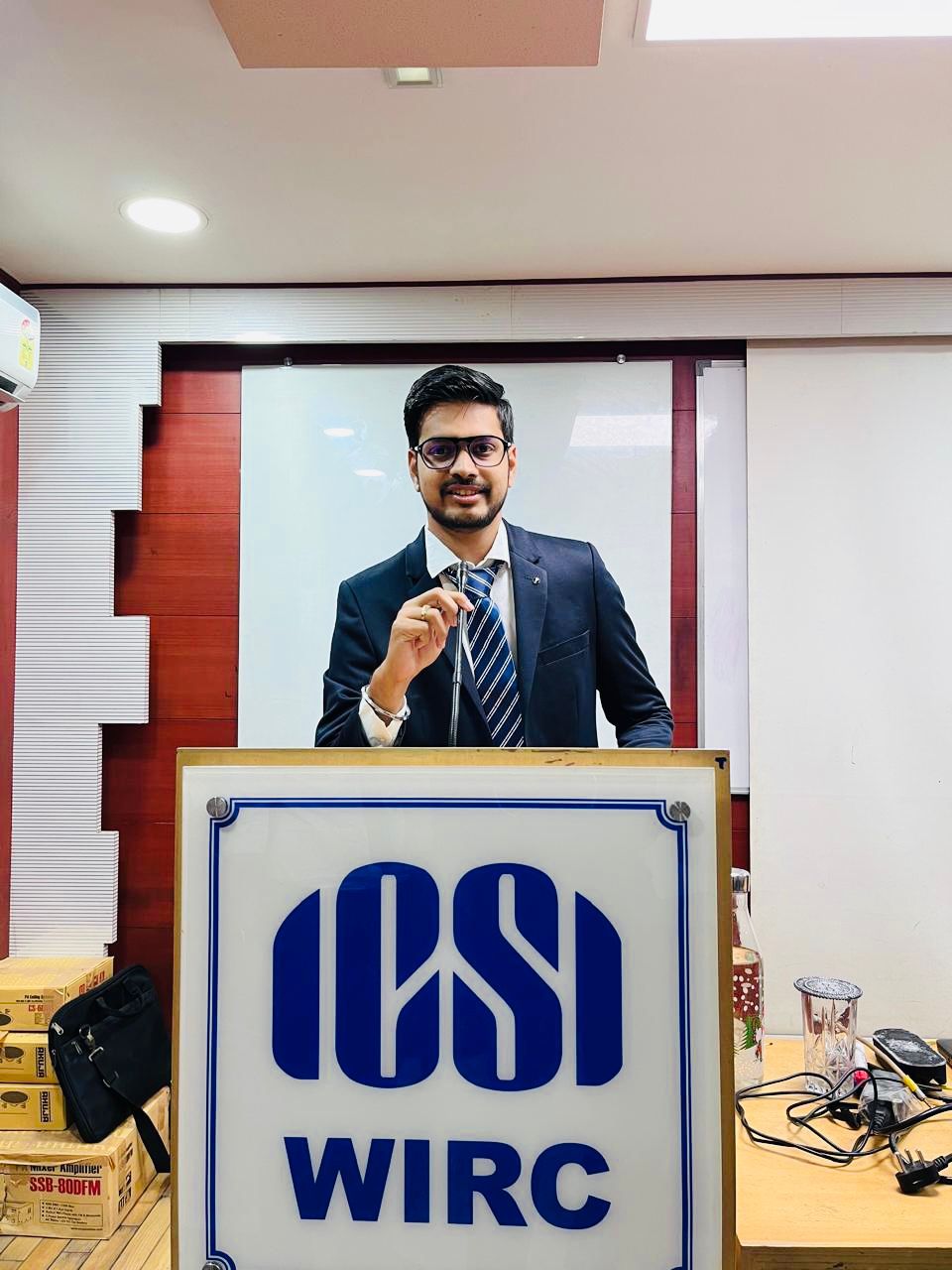
“Solo entrepreneurs need to focus on their craft, not paperwork. The beauty of the OPC is that it gives you the power of a Private Limited company with significantly fewer regulatory headaches.” : Harsh Mehta
Scaling Your Solo Business
One of the most frequent questions we receive is: “What happens if my business grows too big for an OPC?”
The good news is that the 2021-2022 amendments removed the mandatory conversion thresholds. You can grow your turnover to any level and still remain an OPC. However, if you decide to bring in co-founders or external equity investors later, converting your OPC into a standard Private Limited company is a straightforward legal process that we can facilitate at any stage.
Why VS IPR & LEGAL ADVISORS LLP?
Registering a company is more than just filing forms; it is about setting up a legal framework that supports your growth. At VS IPR & LEGAL ADVISORS LLP, we act as your one-stop solution. From checking your brand’s trademark availability to ensuring your GST and MSME registrations are in place, we handle the legal complexities so you can focus on your business.
We bring a decade of experience and a client-focused approach, ensuring clear communication at every stage. Explore our Case Studies to see how we have assisted businesses across India in securing their corporate identity.
Let’s Connect!
Are you ready to transform your solo venture into a registered corporate entity? Whether you need advice on eligibility or a full-service registration package, our team is here to guide you.
 Contact Us