

A product’s appearance can influence customer trust, purchasing decisions and market recognition. When a competitor copies that appearance, the damage may extend beyond aesthetics. It can create customer confusion, weaken brand differentiation and reduce the commercial value of years of design investment.
Design registration protects the visual features of an eligible product in India. It can form an important part of a broader intellectual property (IP) strategy for IT companies, SaaS businesses, hardware manufacturers, pharmaceutical companies, medical-device manufacturers, defence companies and engineering businesses.
Why Product Appearance Matters in Competitive Markets
Customers often recognise a product before they understand its technical specifications. The shape of a hardware device, the structure of a medical package or the distinctive appearance of an engineering component can become a valuable market identifier.
Copying may allow a competitor to:
- Create a similar first impression.
- Benefit from another company’s design investment.
- Make customers believe that the products are connected.
- Reduce the original product’s distinctiveness.
- Enter the market faster without equivalent research and development costs.
- Damage the reputation of the original product if the copy is inferior.
Design registration gives the proprietor a legal right over the registered visual design. It can support enforcement against unauthorised application, sale, import or publication of a registered design or an obvious or fraudulent imitation.
What Is Design Registration in India?
Design registration protects the visual features applied to an article and judged solely by the eye. These features may include:
- Shape.
- Configuration.
- Pattern.
- Ornamentation.
- Composition of lines or colours.
The article must be manufactured or capable of being manufactured through an industrial process. The protection focuses on the product’s appearance. It does not protect the underlying technology, function or manufacturing method.
The governing framework is primarily the Designs Act, 2000 and the applicable Designs Rules and practice procedures issued by the Office of the Controller General of Patents, Designs and Trade Marks.
What Qualifies as a Registrable Design?
A design should generally satisfy the following requirements:
New or original
The design must be new or original. It should not be a mere copy or a minor variation of an existing design.
Not previously published or used
The design should not have been disclosed to the public anywhere in India or internationally before the filing or priority date. Product launches, website images, trade exhibitions, online listings, investor presentations and public demonstrations can create novelty risks.
Significantly distinguishable
The design should be significantly distinguishable from known designs or combinations of known designs. Small cosmetic changes may not be sufficient.
Applied to an article
The design must be applied to an article that is manufactured or capable of industrial manufacture. An abstract idea without a corresponding article is not enough.
Visible on the finished product
The claimed features should generally be visible when the finished product is viewed. Internal features that cannot be seen may not qualify for design protection unless they are visible during ordinary use and otherwise satisfy the legal requirements.
What Design Registration Does Not Protect
Design registration is valuable, but it is not a replacement for every form of IP protection.
It does not protect:
- Software code.
- Algorithms.
- Technical functionality.
- A method of operation.
- A manufacturing process.
- The technical working of a device.
- An abstract business or product idea.
- Confidential defence information.
- A product’s brand name or source identifier by itself.
- Purely functional or mechanical features.
A company should therefore avoid trying to use design registration to protect features that belong under patent, copyright, trademark or confidentiality law.
Industry-Specific Design Registration Strategies

IT Companies, SaaS Businesses and Hardware Manufacturers
For IT businesses, design protection is most relevant to physical products and visual features connected with an article.
Potential examples include:
- The external casing of a router, server or smart device.
- The distinctive enclosure of a point-of-sale terminal.
- A wearable technology product.
- A specialised keyboard, controller or hardware accessory.
- The ornamental appearance of a monitor or display unit.
- The visual arrangement of a GUI applied to a display device, where legally appropriate.
- A distinctive product dashboard displayed as part of a physical device.
A graphical user interface (GUI) is not automatically protected merely because it appears on a screen. A GUI-related filing requires careful assessment of the article, representation and applicable practice. Design registration does not protect the software code, application logic, data structure or functionality behind the interface.
IT companies should also consider copyright for source code and original artistic elements, patents for eligible technical inventions, and trademarks for product names, logos and brand identity.
Pharma Companies and Medical-Device Manufacturers
Pharmaceutical and healthcare businesses often invest significantly in packaging and product presentation. A distinctive package can help a product stand out in a crowded market.
Potentially relevant subject matter includes:
- The shape and configuration of a bottle.
- A distinctive ampoule or container.
- The structure of a blister pack.
- A specialised medical-device housing.
- The external appearance of a diagnostic device.
- A distinctive dispenser or applicator.
- The visual configuration of cartons and packaging.
The filing should focus on the visual features that create eye appeal. Purely functional elements, such as a technical mechanism or a closure required solely for performance, are not protected as design features.
Pharma companies should also protect:
- Product and company names through trademark registration.
- Technical formulations, processes and devices through patents where eligible.
- Original packaging artwork through copyright where applicable.
- Confidential development information through confidentiality agreements and controlled disclosure.
Trademark protection may be particularly important where competitors use similar colour combinations, labels or packaging elements to create confusion. Design registration and trademark protection can work together but protect different legal interests.
Defence Companies and Engineering Manufacturers
Defence and engineering companies may develop products with highly distinctive external forms. Examples may include:
- Protective equipment.
- Vehicle components.
- Specialised enclosures.
- Non-sensitive equipment housings.
- Engineering components manufactured and sold separately.
- Exterior configurations of non-confidential support equipment.
- Industrial tools and precision-machined components.
However, defence-related filings require additional caution. A design application involves disclosure through representations filed with the Designs Office. A company should not use design registration as a substitute for secrecy controls.
A sensitive defence design may require:
- Security classification review.
- Government or contractual clearance.
- Restricted access protocols.
- Non-disclosure agreements (NDAs).
- Employee and vendor confidentiality clauses.
- Controlled technical documentation.
- Assessment of whether public filing is commercially and strategically appropriate.
Designs that are contrary to public order, morality or the security of India may face legal restrictions or refusal. The filing strategy should be evaluated alongside applicable defence procurement, export-control and confidentiality obligations.
Application Process for Design Registration
The official IP India design application workflow generally involves the following stages:
1. Conduct a novelty assessment
Review existing registered designs, market products, online disclosures, catalogues, publications and international materials. A search can identify potential conflicts before resources are invested in filing.
2. Identify the correct article and class
The article and applicable Locarno classification should be identified carefully. Separate applications may be required where protection is sought for different classes.
3. Prepare representations
Drawings, photographs or other representations should clearly show the claimed design. Depending on the product, front, rear, side, top, bottom and perspective views may be required.
4. Prepare Form 1 and supporting documents
The usual filing package may include:
- Form 1 application.
- Applicant details and address for service in India.
- Article name and classification.
- Design representations.
- Statement of novelty.
- Power of Attorney in Form 21, where an agent is appointed.
- Startup or small-entity documents, where applicable.
- Priority documents for convention applications.
- Assignment documents, where required.
- Prescribed government fee.
The current fee should be confirmed through IP India’s official forms and fees information, as it may depend on applicant category and filing method.
5. Respond to examination requirements
The Designs Office may raise objections or seek clarification. A timely and technically accurate response can help address issues relating to representation, classification, novelty or formal requirements.
6. Monitor registration and renewal
A registered design generally receives protection for 10 years from the date of registration. The term may be extended by a further five years, subject to the prescribed renewal process. The maximum statutory term is therefore generally 15 years.
Enforcement Against Copying
Section 22 of the Designs Act, 2000 addresses piracy of a registered design. Depending on the facts, enforcement may involve:
- Cease-and-desist communication.
- Marketplace or platform complaints.
- Customs or import-related action where appropriate.
- Civil proceedings.
- Interim injunction applications.
- Damages, compensation or account of profits.
- Delivery-up or destruction of infringing stock, where ordered.
Enforcement usually depends on the strength of the registration, quality of the representations, evidence of ownership, proof of copying and comparison of the overall visual impression.
A company should preserve:
- Original design files.
- Development records.
- Designer agreements.
- Employment and assignment documents.
- Filing acknowledgements.
- Product launch records.
- Sales and marketing evidence.
- Samples of the allegedly infringing product.
- Screenshots and dated online listings.
Common Mistakes Companies Should Avoid
Businesses often lose valuable protection through avoidable filing and disclosure mistakes.
Common errors include:
- Launching the product before filing.
- Displaying the design at a public exhibition without a filing strategy.
- Filing unclear or inconsistent drawings.
- Including unnecessary technical details in the design representation.
- Claiming functional features as visual features.
- Choosing the wrong article or class.
- Failing to document ownership from employees, consultants or vendors.
- Assuming that design registration protects software code.
- Ignoring international filing deadlines.
- Treating a confidential defence design as suitable for public registration.
- Failing to monitor competitors after registration.
Early legal review can help determine which parts of a product should be filed as a design and which parts require other forms of protection.
Design Registration Should Be Part of a Broader IP Strategy
A strong IP portfolio may combine multiple rights:
| Business asset | Suitable protection |
|---|---|
| Product appearance | Design registration |
| Technical invention | Patent |
| Software code | Copyright and contracts |
| Product name and logo | Trademark |
| Confidential technical information | Confidentiality agreements and internal controls |
| Supplier-created designs | Assignment and manufacturing contracts |
| Brand presentation and packaging | Trademark, design and copyright, depending on the feature |
The correct combination depends on the product, disclosure status, commercial plans, ownership structure and enforcement priorities.
Expert Guidance from VS IPR & LEGAL ADVISORS LLP

Mr. Sanjay Trivedi
Legal & IPR Professional

Vipul Bhatt
LLB & IPR Professional
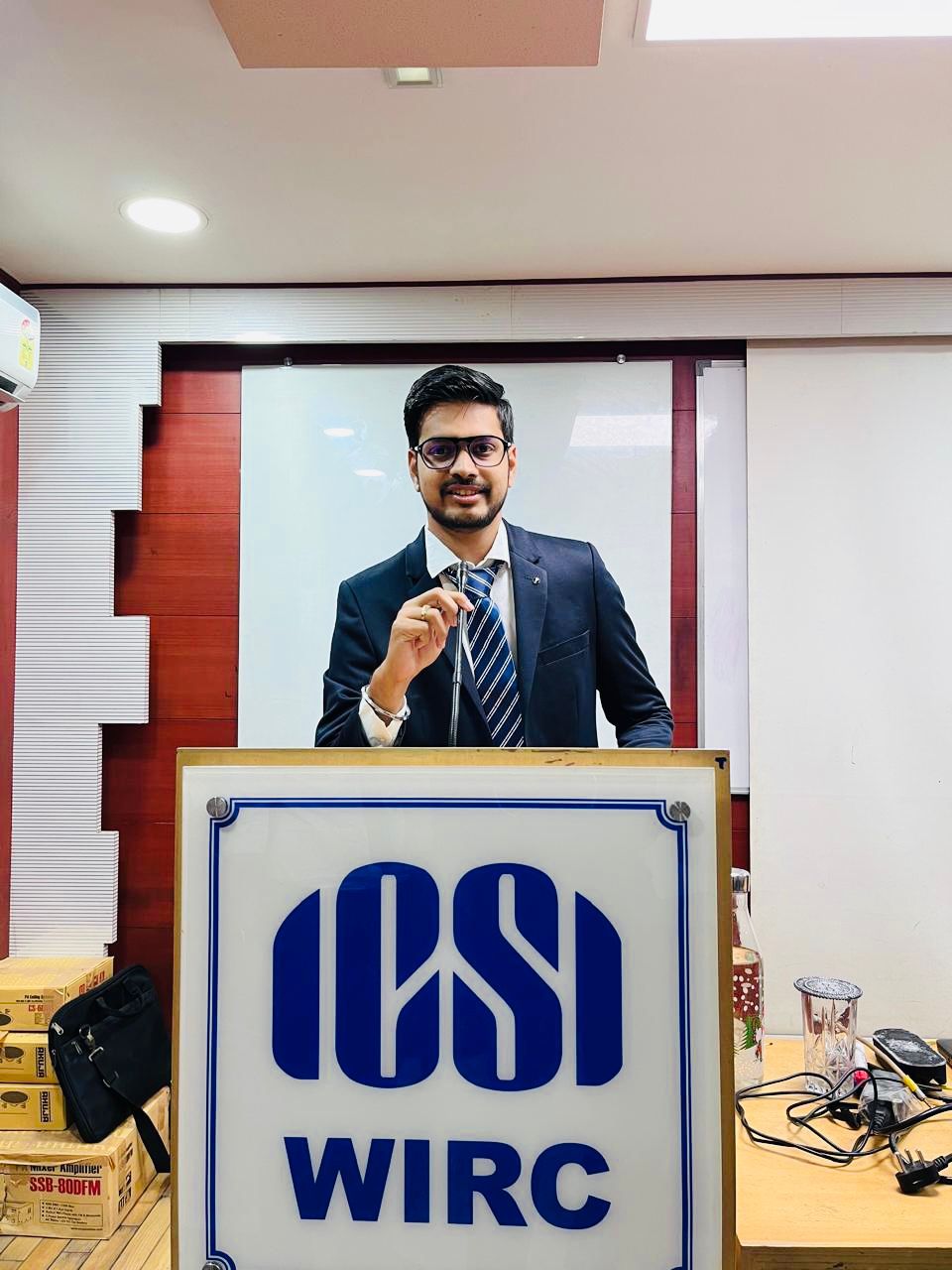
Harsh Mehta
PCS & Legal Advisors
VS IPR & LEGAL ADVISORS LLP provides one-roof support for design registration, patent filing, trademark protection, copyright registration, ownership documentation, confidentiality strategy and corporate advisory.
The firm works with startups, technology companies, manufacturers, pharma businesses, medical-device companies, engineering enterprises and organisations operating in sensitive industries. The objective is clear communication, practical filing support and an IP strategy aligned with business growth.
Protect Your Product Before the Market Copies It
If a product’s appearance is commercially important, delay can create avoidable novelty and enforcement risks. Before publishing product images, launching a new package or demonstrating a new device, obtain a design and IP assessment.
Call us today, leave a message or book a consultation. Let’s talk about protecting your product’s look, technology and brand.
For related brand protection, explore Trademark Registration and Company Registration and Business Support.
Contact VS IPR & LEGAL ADVISORS LLP
VS IPR & LEGAL ADVISORS LLP
B-005 & 6 SURYA KIRAN BUILDING, AWADHUT NAGAR, NEAR ANAND JUICE CENTER, DAHISAR-EAST, MUMBAI 400068, MAHARASHTRA.
EMAIL: PROCESS.VSLEGAL@GMAIL.COM | LEGAL@VSIPR.COM
TEL: +91 8898979393 | +91 9326362813 | +91 8652519622
This article is provided for general information and should not be treated as legal advice. Design eligibility, filing strategy and enforcement options depend on the specific facts of each case.
 Contact Us